The rapid evolution of mobile communication technologies demands efficient solutions. To maintain seamless connectivity, understanding how to set up an auto-tracking perimeter for a mobile base station is crucial. According to a report by the Global Mobile Suppliers Association, 5G networks are expected to serve over 1.7 billion users by 2025. This growth highlights the need for innovative tracking solutions to optimize base station performance.
Setting up an auto-tracking perimeter is not merely a technical challenge; it involves strategic planning and execution. Industry analysts from ABI Research suggest that implementing such systems can enhance network efficiency by up to 30%. This advancement can significantly reduce downtime and improve user experience. However, companies must navigate various challenges, such as signal interference and environmental factors, which can complicate setup and operation.
In pursuing effective tracking, organizations may overlook the necessity for ongoing evaluation and adjustments. Simple implementation does not guarantee optimal performance. Continuous monitoring and data analysis are essential. A well-planned auto-tracking perimeter ultimately ensures a robust mobile base station capable of adapting to fluctuating demands. Ultimately, understanding the nuances of this process is vital for maintaining competitive advantage in a rapidly changing landscape.
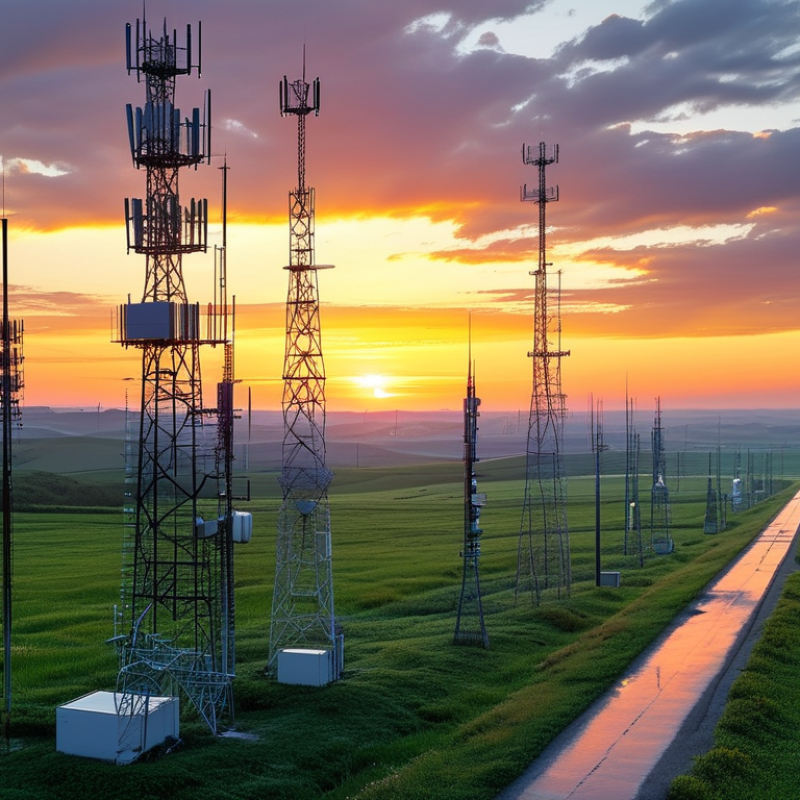
Auto tracking perimeter for mobile base stations is an emerging concept in telecommunications. This technology enhances network efficiency by dynamically adjusting coverage based on user demand and environmental factors. According to a report by the International Telecommunication Union, mobile data traffic is expected to grow by 25% annually. This surge creates challenges for conventional fixed-perimeter systems.
Implementing an effective auto tracking perimeter requires real-time data analytics. It utilizes algorithms that analyze network usage patterns. A study from the Global Mobile Suppliers Association indicates that operators can increase capacity utilization by up to 30% with such systems. However, these improvements can vary based on region and infrastructure readiness. The complexity of integrating these systems often leads to operational challenges and requires continuous assessment.
The effectiveness of auto tracking also depends on sensor accuracy and data integrity. Errors in location tracking can lead to service gaps or missed opportunities for optimization. The technology still needs refinement in urban environments where signal obstructions are prevalent. Therefore, mobile service providers should consider both technological advancements and local conditions when implementing auto tracking systems.
| Parameter | Description | Value |
|---|---|---|
| Coverage Radius | The effective range of the base station | 500 meters |
| Tracking Speed | Speed at which the auto tracking adjusts | 10 degrees/second |
| Notification Interval | Time interval for updates on tracking status | 5 seconds |
| Tech Standard | Standard for the tracking technology | 5G NR |
| Power Consumption | Estimated power required for tracking | 150 Watts |
| Environment Adaptability | Capability to function in various weather conditions | Rain, Snow, Wind |
: Look for range, sensitivity, and environmental adaptability. GPS-integrated systems offer real-time updates for better adjustments.
Assess current components before deployment. Mismatched tools may lead to downtime, affecting service quality.
Reliable products adhere to industry standards and certifications. Systems with such compliance experience fewer malfunctions.
Automation can fail. Manual checks ensure optimal system performance and help address issues quickly when they arise.
Regular assessments can highlight weaknesses. Identifying underperforming components helps maintain overall effectiveness.
User insights can reveal subtle issues. This information is crucial for making adjustments and enhancing service quality.
Maintaining a backup system acts as a safety net. Continuous staff training ensures rapid responses to problems.
Evaluate geographical features and obstacles like buildings. Understanding these elements helps optimize signal quality.
Adopt an iterative approach. Monitor performance, make adjustments based on feedback, and maintain a solid maintenance plan.
Misalignment can cause performance drops over 20%. Regular calibrations based on real-time data are essential for reliability.
In the quest to understand how to set up an auto-tracking perimeter for a mobile base station, the first step is grasping the underlying concept of an auto-tracking system tailored for mobile communications. These systems rely on precise equipment selection, ensuring that the hardware effectively supports the tracking capabilities needed for seamless operation.
Next, one must configure tracking parameters meticulously to achieve optimal coverage, allowing mobile base stations to adapt to dynamic environments. Integration of these stations with auto-tracking technology is crucial, enabling real-time responsiveness to changing signal requirements. Finally, implementing a continuous monitoring strategy to adjust system performance can significantly enhance the overall functionality of the auto-tracking perimeter, ensuring robust connectivity in various conditions.

 HawkEye Camera