Top 10 Benefits of Dual Spectrum Cameras for Maritime Use?

Time:2026-05-07 Author:Sophia
0%

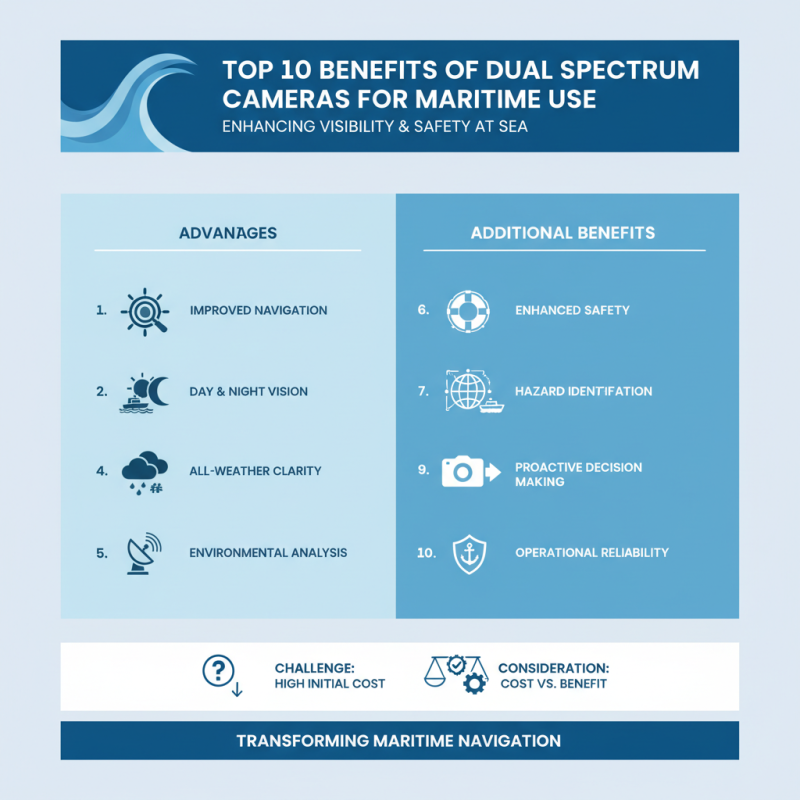
In the maritime industry, technology evolves quickly. One innovation making waves is the dual-spectrum camera. Experts highlight its advantages. Dr. James Hargreaves, a leading maritime technology specialist, has noted, "What are the benefits of dual-spectrum cameras in maritime use? They enhance visibility and safety in challenging conditions."

This technology merges infrared and optical imaging. It significantly improves situational awareness during day and night operations. In fog, rain, or low light, these cameras provide clear images. This capability can be crucial for navigation and collision avoidance. Enhanced visibility can save lives at sea.

Furthermore, dual-spectrum cameras can analyze environmental data effectively. They assist in identifying potential hazards, such as floating debris or other vessels. However, a challenge remains: the high initial cost of these systems. Not all maritime operations can afford such advanced technology. Balancing cost and benefit is essential for widespread adoption. Integrating dual-spectrum cameras could transform maritime navigation, but it's not without its hurdles.
Top 10 Benefits of Dual Spectrum Cameras for Maritime Use?

Advantages of Dual Spectrum Cameras in Enhancing Maritime Surveillance

Dual spectrum cameras offer significant advantages for maritime surveillance by combining visible and thermal imaging. This fusion enhances the detection and identification of objects in diverse conditions. For instance, they can spot small vessels at night or in foggy weather, where traditional cameras fail. The ability to see through darkness or unfavorable weather directly supports maritime safety.

When considering maritime operations, it's crucial to ensure that the cameras are properly calibrated. Misalignment can result in missed threats or false positives. Regular maintenance of the cameras is equally important. This prevents issues that can arise from environmental exposure, such as saltwater corrosion or thermal drift.

Utilizing dual spectrum cameras also demands personnel training. Operators should understand the technology to maximize its potential. This can include recognizing the significance of thermal anomalies, which might indicate unauthorized vessels. Mistakes happen, and retraining can help in correcting them. In-depth knowledge can lead to better responses and enhanced maritime security. Through careful implementation and continuous improvement, the benefits of dual spectrum cameras can be fully realized.

Top 10 Benefits of Dual Spectrum Cameras for Maritime Use

Benefit Description Impact on Maritime Surveillance
Enhanced Visibility Combines thermal and optical imaging for better clarity in various conditions. Improved detection of vessels regardless of weather conditions.
Real-time Monitoring Provides continuous updates on maritime activities. Allows for immediate response to suspicious activities.
Increased Safety Detects potential hazards in real-time. Helps prevent accidents and ensures safer navigation.
Cost Efficiency Reduces the need for multiple surveillance systems. Lower operational and maintenance costs.
Integration Capabilities Easily integrates with existing maritime security systems. Enhances overall security infrastructure.
Long Range Detection Enables detection over longer distances. Provides early warning of potential threats.
Data Recording Captures and stores footage for later analysis. Helps in investigations and incident resolution.
Night Vision Capability Operates effectively in low light conditions. Enhances surveillance during night operations.
User-friendly Interface Simplifies the monitoring process for operators. Improves operational efficiency and speed.
Environmental Resistance Durable designs suited for harsh maritime conditions. Ensures longevity and reliability in service.

Improved Incident Detection Rates with Dual Spectrum Imaging Technology

Dual spectrum cameras are changing maritime operations. This technology enhances incident detection rates significantly. According to a report from the Maritime Safety Authority, dual spectrum imaging can improve detection efficiency by up to 30%. This is critical for preventing accidents and ensuring safety at sea.

Combining thermal and visible imaging allows for better visibility in challenging conditions. For instance, fog, rain, or darkness no longer obscure crucial details. Studies show that more than 60% of maritime incidents occur under such conditions. The integration of dual spectrum technology directly addresses this issue, ensuring a clearer view for operators.

**Tip:** Consider training crew members on the unique capabilities of dual spectrum cameras. This ensures they can maximize their potential. Emphasizing the importance of regular maintenance is essential. Keeping the cameras in peak condition enhances their reliability and effectiveness.

The flexibility of this imaging technology makes it useful beyond routine surveillance. It's effective for search and rescue operations too. By identifying potential hazards quickly, vessels can avoid dangerous situations. Data from maritime research indicates that effective detection significantly reduces response times, saving lives.

Integration of Dual Spectrum Cameras in Shipboard Security Systems

The integration of dual spectrum cameras in shipboard security systems revolutionizes maritime surveillance. These cameras combine thermal and visible light technologies. This allows for enhanced monitoring in varying conditions, significantly improving threat detection accuracy. During low visibility situations, such as fog or night, thermal imaging becomes crucial. It helps security teams identify potential intruders or hazards efficiently.

Moreover, dual spectrum cameras provide comprehensive situational awareness. The visible spectrum captures clear images during the day, allowing for detailed analysis. Meanwhile, the thermal spectrum highlights heat signatures, which can reveal unauthorized activities. These dual inputs make surveillance more reliable. However, there can be challenges in calibrating the two types of imagery. Accurate fusion of both spectrums is essential but requires expertise.

Training personnel is vital for maximizing the effectiveness of these systems. Operators need to understand the camera’s capabilities. They must also learn how to interpret the images correctly. Standard training can sometimes overlook the importance of real-world scenarios. Each maritime environment presents unique challenges, necessitating adaptable tactics. Emphasizing hands-on experience could bridge this gap in understanding.

Reduction of False Alarms through Thermal and Visible Spectrum Fusion

Dual spectrum cameras integrate thermal and visible light technologies. This fusion enhances detection capabilities in maritime environments. By combining both spectra, these cameras significantly reduce false alarms. Traditional cameras often misidentify warm objects for threats. A ship's engine might falsely trigger an alert. In contrast, thermal readings can confirm or deny potential risks, making operations smoother.

Visibility in maritime conditions can be challenging. Fog, rain, or darkness often hinder traditional surveillance methods. Thermal imaging excels in these situations. It detects heat signatures regardless of light availability. This capability is crucial for safety. Maritime operations benefit greatly from accurate monitoring. However, reliance on technology isn't without risks. Cameras must be regularly calibrated for accuracy. Misalignment can lead to critical oversights, resulting in unnecessary alerts or missed dangers.

Deploying dual spectrum cameras can transform maritime security. By cutting down on false alarms, they save time and resources. But professionals must remain vigilant and continually assess system performance. Continuous training is vital. Regular updates ensure the technology meets evolving maritime needs. Balancing innovation with practical application is essential for success.

Top 10 Benefits of Dual Spectrum Cameras for Maritime Use

Cost-Effectiveness of Dual Spectrum Cameras for Maritime Operations

Dual spectrum cameras are gaining attention in maritime operations. Their ability to capture images in both visible and infrared spectrums significantly enhances situational awareness. This technology helps in detecting hazards that might be invisible to the naked eye. Reliable thermal imaging can spot objects such as submerged debris or persons in distress, ensuring timely interventions.


However, the cost-effectiveness of dual spectrum cameras cannot be overstated. While the initial investment may seem high, the long-term returns are substantial. Reduced search and rescue times can save lives and resources. Additionally, these cameras can lower insurance premiums by mitigating risks. The dual capability allows for fewer equipment purchases, leading to significant savings on maintenance and operational costs.


Yet, some organizations may overlook the value of this technology. There can be hesitation based on perceived complexity or the learning curve involved. Accepting that such tools require training is essential. A failure to invest in proper training may diminish the effectiveness of the cameras. Integrating this hardware into existing systems can also present challenges that demand thoughtful planning.

FAQS

: What are dual spectrum cameras used for?

: They enhance shipboard security systems by combining thermal and visible light technologies for better monitoring.

How do dual spectrum cameras improve threat detection?

They provide accurate monitoring in low visibility conditions like fog or night, detecting potential intruders effectively.

What are the challenges of using dual spectrum cameras?

Calibrating thermal and visible images can be complex. Expertise is required to ensure accurate fusion of both spectrums.

Why is training important for operators?

Operators must understand camera capabilities and learn to interpret images correctly to maximize system effectiveness.

How do dual spectrum cameras reduce false alarms?

They combine thermal readings with visible light to confirm potential risks, preventing misidentification of warm objects.

What specific conditions can thermal imaging overcome?

Fog, rain, and darkness. Thermal imaging can detect heat signatures without reliance on light availability.

What risks are associated with reliance on technology?

Cameras must be regularly calibrated. Misalignment can lead to critical oversights or unnecessary alerts.

How can continuous training benefit security personnel?

Continuous training helps adapt to unique maritime environments and ensures the effectiveness of surveillance tactics.

What is essential for the successful deployment of dual spectrum cameras?

Balancing innovation with practical application, while regularly assessing system performance for evolving maritime needs.

Why might standard training be inadequate?

It often overlooks real-world scenarios that present unique challenges in various maritime environments.

Conclusion

Dual-spectrum cameras offer numerous advantages for maritime use, significantly enhancing surveillance capabilities. One of the primary benefits is improved incident detection rates, as these cameras combine thermal and visible spectrum imaging technology, allowing for better visibility in various conditions. Their integration into shipboard security systems bolsters overall safety and security, safeguarding vessels against potential threats.

Additionally, dual-spectrum cameras help reduce false alarms by effectively fusing thermal and visible data, ensuring that security personnel can focus on genuine threats. This not only enhances operational efficiency but also translates into cost-effectiveness for maritime operations, as reduced false alarms lead to lower response costs and better resource allocation. Therefore, the question of what are the benefits of dual-spectrum cameras in maritime use can be succinctly answered: they provide enhanced detection, improved security, and increased efficiency while lowering operational costs.

Sophia

Sophia

Sophia is a dedicated marketing professional with an exceptional depth of knowledge about her company's products and services. With a keen understanding of market trends and customer needs, she crafts insightful blog posts that not only inform but also engage readers, enriching the company’s online......