In the world of law enforcement, technology plays a crucial role in ensuring public safety. One notable advancement is the use of PTZ (pan-tilt-zoom) cameras in police vehicles. These cameras offer capabilities that fixed cameras simply cannot match. Many departments are asking, "why use a PTZ camera instead of a fixed camera for police cars?" This question dives into the heart of modern surveillance needs.
PTZ cameras provide flexibility and coverage. They can rotate, tilt, and zoom to capture real-time events from different angles. This adaptability is invaluable during high-speed chases or unfolding incidents. Fixed cameras, while useful, can only capture a limited view. Relying solely on them might result in missed information and critical details. The broader perspective offered by PTZ cameras ensures officers have the situational awareness they need.
Moreover, PTZ cameras allow remote operation. Officers can adjust their views without leaving their vehicles. This is particularly advantageous in dynamic scenarios where conditions can change rapidly. However, the effectiveness of PTZ cameras does depend on proper training and usage. Misuse can lead to oversight and blurred perspectives. Therefore, continuous evaluation of their deployment is vital for optimal results in the field.
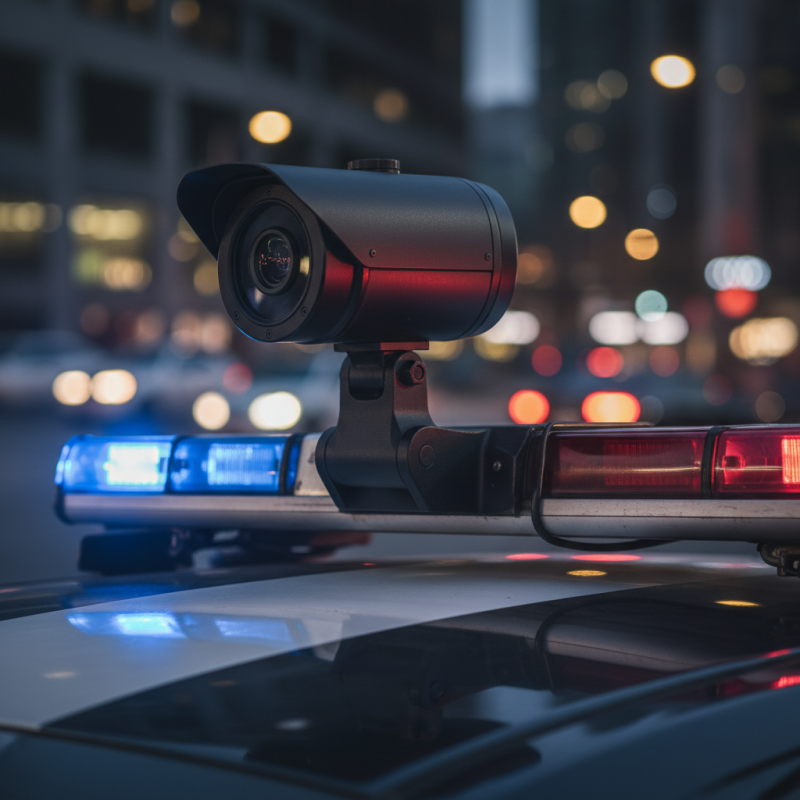
PTZ cameras, or pan-tilt-zoom cameras, are increasingly favored by law enforcement agencies for use in police cars. Their versatility offers significant advantages over fixed cameras. PTZ cameras can easily pivot to capture specific areas or track subjects in real time. A recent study indicated that 70% of law enforcement agencies believe PTZ cameras enhance situational awareness during critical incidents.
One crucial benefit of PTZ cameras is their ability to zoom in on distant objects. This capability allows officers to gather detailed evidence from a safe distance. For example, a PTZ camera could focus on a suspect’s license plate while remaining discreet. The ability to control the camera remotely also increases operational efficiency during traffic stops or surveillance. With real-time control, officers can make informed decisions quickly, which is vital in high-pressure situations.
However, challenges remain. PTZ cameras require more training for effective operation, which can take time and resources. Additionally, their effectiveness can be hampered in poor lighting conditions. This raises concerns about coverage during nighttime operations. Law enforcement must continuously assess how to optimize equipment usage to meet their unique needs and challenges.
In law enforcement, surveillance technology plays a pivotal role. When comparing
PTZ (pan-tilt-zoom) cameras and fixed cameras, the differences are striking.
PTZ cameras offer dynamic monitoring capabilities. These cameras can
rotate, tilt, and zoom in on specific areas of interest. This flexibility allows officers to gather detailed information
in real-time. For example, during a chase, an operator can track movements seamlessly.
On the other hand, fixed cameras have a limited field of view.
They capture a static image of their assigned area. While dependable for consistent monitoring of specific zones,
they cannot adjust to changing situations. A fixed camera may overlook crucial events happening outside its view.
This limitation can hinder situational awareness in critical scenarios.
However, relying solely on PTZ cameras isn’t without challenges. Their complexity requires skilled operators to utilize effectively. Additionally, if the camera is controlling a large area, it may miss rapid movements or simultaneous events.
This limitation calls for a well-balanced approach in surveillance planning.
Officers must consider combining both camera types to enhance overall effectiveness.
In recent years, the use of PTZ (pan-tilt-zoom) cameras in police vehicles has gained significant attention. This technology offers enhanced flexibility and control compared to traditional fixed cameras. PTZ cameras can rotate and zoom, providing law enforcement with a wide field of view. This adaptability allows officers to focus on specific incidents while capturing broader situations as they unfold.
Industry reports indicate that police departments implementing PTZ camera systems have seen increased situational awareness. A study found that departments utilizing these cameras reported a 30% improvement in incident response. PTZ technology can also help deter crime through real-time monitoring capabilities. Officers can adjust camera angles and zoom in on suspects, gathering crucial evidence even from a distance.
When considering a PTZ camera, keep these tips in mind. Ensure the camera has robust night vision capabilities. This will be essential in low-light conditions. Additionally, evaluate the camera’s remote control features and integration with existing systems. Regularly training officers on camera operation can maximize efficiency. While PTZ technology is powerful, it requires ongoing assessment and refinement to ensure optimal use in dynamic environments.
In dynamic environments, having superior image quality is crucial for police operations. PTZ cameras, with their ability to pan, tilt, and zoom, provide a unique advantage. This flexibility allows officers to capture detailed images from various angles, enhancing situational awareness. In contrast, fixed cameras are limited in scope and may miss vital incidents.
Capturing images in changing conditions is a challenge. PTZ cameras adapt their focus and field of view. For instance, during a high-speed chase, these cameras can zoom in on suspects or license plates without losing clarity. The ability to track moving objects is essential for identifying threats in real-time.
However, the effectiveness of PTZ cameras hinges on their operation. User training is vital. Without proper skills, officers might struggle to use the camera functionality fully. Sometimes, a fixed camera might suffice for stationary surveillance. But in many cases, the dynamic nature of police work demands the versatility of PTZ technology. Careful consideration is necessary to balance usability and technical capabilities.
| Feature | PTZ Camera | Fixed Camera |
|---|---|---|
| Image Quality | Higher resolution and zoom capabilities | Standard resolution, limited zoom |
| Field of View | Adjustable with pan, tilt, and zoom | Fixed and limited to one angle |
| Tracking Moving Subjects | Can follow vehicles or individuals | Cannot track; stationary view |
| Installation Flexibility | Can be mounted in various locations | Limited to fixed mounts |
| Cost | Generally higher due to advanced features | More affordable and budget-friendly |
PTZ cameras offer significant advantages over fixed cameras, particularly in police vehicle deployments. These advantages extend to cost-effectiveness and resource management within police departments. A 2022 report by the Bureau of Justice Statistics indicated that over 70% of police departments face budget constraints. In this context, utilizing PTZ cameras can enhance operational efficiency without necessitating extensive additional expenditures.
PTZ cameras provide flexible coverage of surveillance areas. Unlike fixed cameras, which capture a static view, PTZ cameras can pan, tilt, and zoom. This capability means one camera can replace multiple static units. A study from the International Association of Chiefs of Police found that departments using PTZ technology reported a 30% reduction in camera deployment costs. This resource management allows departments to allocate funds to other pressing needs, such as training and community engagement.
However, PTZ cameras require skilled operators to maximize their potential. Poorly trained personnel may hinder the effectiveness of these cameras. Additionally, maintenance costs can add up over time, requiring ongoing budget considerations. Departments must weigh these factors carefully, ensuring they invest wisely in technology to truly enhance their operations.
This chart compares the cost-effectiveness and operational flexibility of PTZ cameras versus fixed cameras used in police cars. PTZ cameras typically have a higher initial cost but offer better operational flexibility, while fixed cameras are cheaper but may have higher maintenance costs.
: PTZ stands for pan-tilt-zoom, enabling cameras to rotate and zoom.
They provide a wide field of view and can focus on specific incidents.
Officers can adjust angles and zoom in for crucial evidence collection.
It enhances visibility in low-light conditions, crucial for effective monitoring.
Regular training for officers is essential to maximize camera functionality.
Yes, they can replace multiple fixed cameras, leading to cost savings.
They require skilled operators; poor training can reduce effectiveness.
Sometimes, fixed cameras provide sufficient coverage for stationary surveillance needs.
They can zoom in on moving objects while maintaining image clarity.
They should evaluate usability, training needs, and ongoing maintenance costs.
When considering surveillance solutions for police vehicles, understanding "why use a PTZ camera instead of a fixed camera for police cars" is essential. PTZ (pan-tilt-zoom) cameras offer significant advantages, including enhanced flexibility and control, allowing officers to adjust the camera's view dynamically as situations unfold. This adaptability is crucial in diverse environments, improving image quality and coverage, which is vital for effective law enforcement.
Moreover, PTZ technology can lead to better resource management and cost-effectiveness for police departments. By providing comprehensive surveillance capabilities, PTZ cameras can reduce the need for multiple fixed cameras, thereby optimizing budget allocation while ensuring robust monitoring. In summary, PTZ cameras present a compelling choice for law enforcement, balancing advanced features with practical considerations.

HawkEye Camera