Why is gyro-stabilization important for shipborne cameras? On a working vessel, the camera platform moves with the hull. Swell lifts the bow; engine vibration adds a fine, persistent tremor. A distant buoy can jump across the image, even when the operator holds the controls carefully. Gyro stabilization senses angular motion and helps counter it, keeping the view steadier as the ship rolls, pitches, and yaws. The result is more usable footage for navigation support, inspection, search operations, and evidence review.
Steadier images matter. Operators can identify a marker, read a display, or track a small craft with less visual effort. Stabilization may also reduce motion blur, though it cannot fix poor focus, low light, or a camera mount that flexes. That distinction is easy to overlook. Performance depends on sensor quality, control response, lens choice, installation, and sea conditions. A system that works well in harbor may struggle in short, steep waves offshore. Some vibration can remain, and aggressive correction may look unnatural. Real experience at sea is rarely as tidy as a product demonstration. For that reason, gyro-stabilized cameras should be evaluated on the vessel and in the conditions where they will be used. Understanding why is gyro-stabilization important for shipborne cameras helps buyers and operators judge image stability realistically, rather than treating it as a specification alone. The technology is valuable, but not magic.
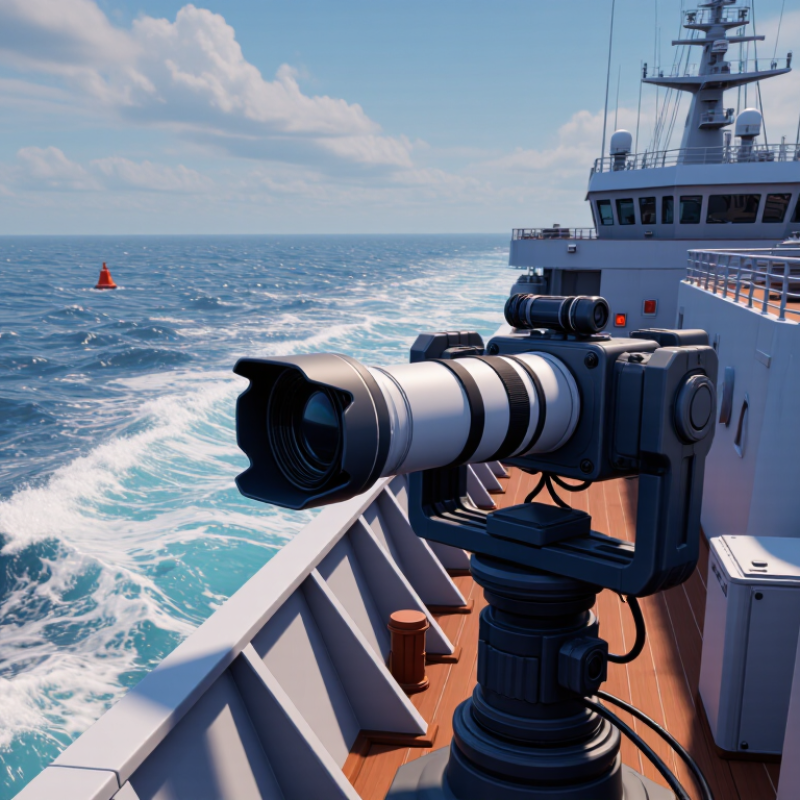
At sea, a camera rarely sits on a truly still platform. Waves lift and lower the deck, while engine vibration can add a fine, persistent tremor. Even a small roll can shift a distant vessel across the frame. The image may look blurred, or the subject may jump between exposures. That matters.
A gyroscope measures angular motion, helping a stabilization system counter unwanted rotation. On a ship, pitch tilts the camera up and down, roll leans the horizon, and yaw sweeps the view sideways. These movements make it harder to track a moving target or inspect details from a distance. Stabilization can reduce that movement and produce steadier footage for monitoring, documentation, and review. It is not magic.
Results depend on the camera mount, lens, exposure time, and the character of the motion. A short, sharp vibration may remain visible, while slower rocking may be easier to correct. In practice, crews should check footage from the intended mounting position; a test on a calm day can be misleading. Stabilization may also crop or shift the frame, so operators need enough viewing area around the subject. Rough water can still defeat a setup, and that limitation deserves attention.
The pixel-drift estimates below are illustrative calculations, not measurements of a particular vessel. They assume a 1920-pixel-wide image, a 60° horizontal field of view, and constant angular motion during the exposure. At this field of view, image movement near the center is approximately 32 pixels per degree.
| Ship Motion | Camera Rotation Axis | Illustrative Angular Rate | Exposure Time | Estimated Image Drift | Likely Effect Without Stabilization | How Gyro Stabilization Helps |
|---|---|---|---|---|---|---|
| Pitching | Horizontal axis; the camera points alternately upward and downward | 1°/s | 1/30 s | About 1.1 pixels | Vertical blur or frame-to-frame displacement, especially on distant details. | Compensates for camera rotation during exposure and helps keep the view steadier. |
| Rolling | Optical axis; the image rotates as the vessel leans from side to side | 2°/s | 1/30 s | About 2.1 pixels of movement near the image center | Rotational blur and a visibly tilting horizon across successive frames. | Reduces roll-induced image rotation, helping maintain a more level, stable composition. |
| Yawing | Vertical axis; the camera pans left and right with the vessel | 3°/s | 1/60 s | About 1.6 pixels | Horizontal smear, which can reduce the clarity of moving or distant targets. | Offsets unwanted angular movement while allowing deliberate camera tracking. |
| Combined pitch and roll | Horizontal and optical axes move at the same time | 1.5°/s on each axis | 1/15 s | About 3.2 pixels per axis | Blur and complex image movement become more noticeable during longer exposures. | Corrects motion across multiple axes, improving image steadiness when the camera and stabilization system are properly configured. |
| Short-duration vibration | Rapid, small rotations around one or more axes | Varies with the vessel and equipment | Varies with the camera settings | Depends on angular rate and exposure duration | Fine image jitter can soften detail even when the vessel’s larger movements are modest. | Gyro-based correction can respond to measured angular motion; performance depends on system bandwidth, mounting, and vibration conditions. |
| Longer exposure in rough motion | Any axis, often a combination of axes | For example, 2°/s on one axis | 1/4 s | About 16 pixels on the moving axis | Substantial directional blur can occur because the camera moves farther during the exposure. | Can substantially reduce motion-related blur, although stabilization cannot remove every source of blur or replace adequate shutter speed. |
Gyros measure angular movement, such as roll, pitch, and yaw. Motors tilt the camera in the opposite direction. The vessel still moves.
It can counter rotations caused by waves and turns. Sudden impacts, vibration, and sideways movement may still shake the image.
They can help monitor harbor traffic, buoys, and approaching craft. Crew may also inspect lines, winches, or cargo from a steadier view.
No. It may provide clearer footage for observation and review, but it cannot prevent incidents or replace trained watchkeepers.
Camera weight, gimbal torque, control delay, and mount stiffness all matter. A flexible mast can amplify movement.
Small shifts become more noticeable at higher zoom. Check for horizon drift and blur at the actual working zoom.
Yes. Long exposure times can blur a distant buoy, even when the horizon looks level. A steady image is not always a sharp one.
Use a rigid, vibration-isolated mount. Test during turns and rough-water transits, not only at anchor. Calm conditions can be misleading.
Shipboard cameras face constant movement from waves, wind, engine vibration, and changes in vessel speed or direction. These motions can cause blurred images, shaky video, and difficulty keeping distant subjects in view. Understanding why is gyro-stabilization important for shipborne cameras begins with how it detects unwanted movement and adjusts the camera’s position to keep the image steady, even as the vessel moves.
A stable view can improve image clarity, support reliable monitoring, and make it easier to observe navigation areas, coastlines, and offshore activity in varied maritime environments. Stabilization performance depends on factors such as camera mounting, the vessel’s motion, operating conditions, and the camera’s ability to respond smoothly to movement. When these factors are considered together, gyro-stabilized cameras can provide more consistent imagery for shipboard observation and recording.

 HawkEye Camera