Integrating AI object recognition into existing PTZ systems presents a compelling opportunity to enhance surveillance efficiency. Experts in this field, such as Dr. James Reynolds, highlight the importance of this integration. He states, "Achieving seamless object recognition is crucial for the future of intelligent surveillance."
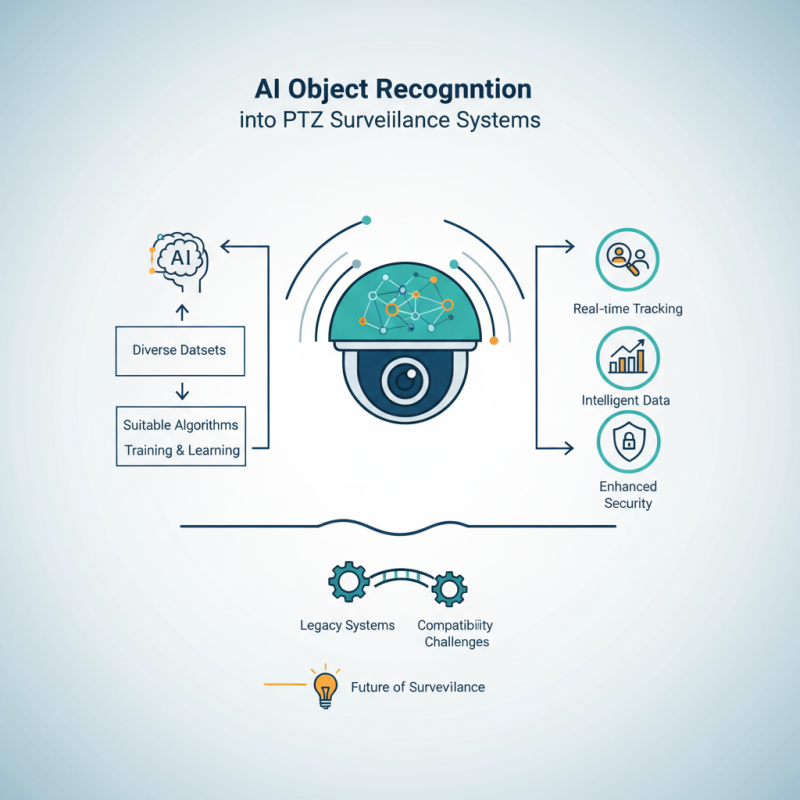
As surveillance technology evolves, the implementation of AI can drastically improve functionality. Incorporating AI object recognition allows PTZ systems to detect and track objects in real-time. This advancement not only enhances security but also enables more intelligent data analysis. However, challenges exist in ensuring compatibility with legacy systems.
Understanding how to integrate AI object recognition into existing PTZ systems requires careful planning. Identifying suitable algorithms and frameworks is key. Moreover, the training of AI systems must involve diverse datasets for better accuracy. Such integrations may require additional resources and expertise, leading to an evolving landscape. By addressing these complexities, the potential for smarter surveillance systems can become a reality.
PTZ systems are essential for modern surveillance. They consist of three main components: a pan-tilt mechanism, a zoom lens, and a control interface. The pan-tilt mechanism allows the camera to move horizontally and vertically. This flexibility helps cover large areas. The zoom lens enables detailed image capture from various distances. Controls can be manual or automatic, depending on the system.
Integrating AI object recognition enhances these systems significantly. The technology identifies objects in real-time. This capability can alert operators to potential threats. Yet, implementing AI is not without challenges. Accurate recognition requires high-quality data and continuous training. Over-reliance on AI may lead to oversight issues. It's vital to balance tech integration with human oversight for better reliability.
The interaction between these components shapes how effectively a PTZ system functions. Understanding the hardware and software aspects is crucial for achieving optimal performance. Observing how details like camera angles interact with AI can provide insights. However, testing systems in real scenarios can reveal hidden flaws. Continuous improvements are necessary to stay ahead in object recognition technology.
AI object recognition technologies have rapidly evolved, significantly enhancing PTZ (pan-tilt-zoom) systems. These technologies can identify and classify objects in real-time, providing valuable insights for surveillance and monitoring applications. Integrating AI with PTZ systems empowers them to automatically track moving objects, increasing efficiency and effectiveness. This integration enables a higher level of situational awareness, crucial for security purposes.
It's important to choose the right AI model for specific needs. Models vary significantly in their accuracy and response times. For optimal results, consider factors like object types, environmental conditions, and lighting. Testing different models in actual scenarios can provide insights into their strengths and weaknesses. Also, remember that simplicity can often be more effective. Complex models may require more resources and could lead to slower response times.
Regular updates and training of the AI model are essential for maintaining performance. Object recognition systems need to adapt to new environments and objects. Enhance your system by incorporating user feedback. This can help identify areas for improvement. The integration of AI into PTZ systems is not without challenges. Be prepared for occasional misclassification or tracking errors, and continually refine your approach.
Integrating AI object recognition into PTZ (Pan-Tilt-Zoom) systems can enhance surveillance capabilities significantly. The process begins with selecting suitable AI models trained to identify specific objects effectively. These models should be compatible with the PTZ system’s existing architecture. According to a report by the International Data Corporation (IDC), deploying AI in surveillance can reduce false alarms by up to 90%. This can improve alert accuracy and ensure operators focus on real threats.
Once the AI model is selected, the next step is to connect it to the PTZ system. This often requires adapting the system’s firmware or data interface. An effective connection allows for real-time analytics, enabling the camera to autonomously track identified objects. Research indicates that integrating AI can increase operational efficiency by over 70%. However, there can be challenges. For example, compatibility issues may arise due to varying data formats.
**Tip:** Ensure that the AI model can run efficiently on the hardware limits of your PTZ system.
Monitoring and adjusting the AI model’s performance is also critical, as environmental factors can impact accuracy. Regular updates and retraining might be necessary to maintain reliability. While AI offers great potential, it’s essential to actively manage these integrations.
**Tip:** Create a feedback loop from users to refine the AI model continuously.
Integrating AI object recognition into PTZ (Pan-Tilt-Zoom) systems presents various challenges. One major issue is the complexity of real-time processing. According to a recent industry report, 67% of AI implementations face delays due to insufficient processing power. This lag can undermine the effectiveness of surveillance systems, particularly in high-speed environments. Ensuring robust hardware capabilities is crucial for seamless integration.
Another challenge lies in data accuracy. AI systems require vast amounts of labeled data for effective learning. A study showed that 80% of accuracy issues stem from poorly annotated datasets. Without high-quality training data, object recognition may produce false positives or negatives. Organizations must invest time and resources in data collection and labeling to improve reliability.
Finally, user trust plays a key role. Many users are skeptical about AI technology. A survey found that 58% of users feel uncomfortable with AI's decision-making in security settings. Clear communication about AI capabilities and limitations is essential. Addressing these concerns can foster a more positive perception of AI integration in surveillance systems.
AI object recognition technology is revolutionizing PTZ (pan-tilt-zoom) systems across various sectors. In surveillance, AI can significantly enhance threat detection. A recent report indicates that integrating AI can boost detection accuracy by over 80%. This technology allows real-time recognition of suspicious behaviors or unauthorized access, minimizing human oversight. Such capabilities are crucial in urban security and critical infrastructure management.
In retail, AI-enhanced PTZ cameras analyze customer behavior. They provide insights into traffic patterns and demographics. For instance, a study revealed that businesses using AI-driven analytics can increase conversions by 20% due to tailored marketing strategies. This data enables retailers to enhance customer experiences while optimizing their layouts.
Manufacturing is another area benefiting from AI object recognition. Quality control processes can be automated, reducing the chances of human error. Reports show that companies implementing AI in their production lines see efficiency improvements of up to 30%. However, reliance on AI may present challenges, such as misinterpretations in complex environments, requiring ongoing adjustments and human supervision.
: PTZ systems consist of a pan-tilt mechanism, a zoom lens, and a control interface.
It allows the camera to move horizontally and vertically for better coverage of large areas.
AI enhances object recognition, helping to identify potential threats in real-time.
Challenges include ensuring compatibility and managing the accuracy of AI models over time.
AI can reduce false alarms by effectively distinguishing real threats, improving alert accuracy.
Applications range from urban security to retail analytics and automated manufacturing.
Over-reliance on AI can lead to missed oversights, so human checks are essential for reliability.
Regular updates are necessary to maintain the accuracy and performance of AI models.
Not always; misinterpretations can occur, requiring adjustments and human supervision.
AI can analyze customer behavior, improving traffic management, and increasing conversion rates.
In the article "How to Integrate AI Object Recognition into PTZ Systems," a comprehensive exploration of the integration process is provided. It begins with an understanding of PTZ (Pan-Tilt-Zoom) systems and their essential components, followed by an overview of emerging AI object recognition technologies that enhance these systems' capabilities. The integration process details how to connect AI models with existing PTZ setups, addressing various challenges encountered during implementation, such as data compatibility and processing speed. Solutions are proposed to overcome these obstacles, ensuring a seamless integration.
Furthermore, the article highlights the numerous applications and use cases of AI in PTZ systems, demonstrating the transformative impact of this technology across different sectors. Overall, it provides valuable insights on how to integrate AI object recognition into existing PTZ systems effectively, showcasing the potential benefits for surveillance, automation, and operational efficiency.

HawkEye Camera