Why Is IP67 Better Than IP66 for Vehicle Cameras?

Time:2026-09-13 Author:Madeline
0%

Why Is IP67 Better Than IP66 for Vehicle Cameras? The answer depends on where the camera operates. Many vehicles face heavy rain, pressure washing, road spray, mud, and sudden puddle impacts. IP66 protects against dust and powerful water jets. IP67 adds protection against temporary immersion, usually up to one metre for 30 minutes. That difference matters when a camera sits near a bumper, wheel arch, or low-mounted blind-spot system.

So, what is the difference between IP66 and IP67 for vehicle cameras? IP66 focuses on water projected from outside. IP67 tests water entering during immersion. It does not automatically mean stronger jet resistance. In fact, an IP67-only camera may not provide the same washdown protection as an IP66-rated model. A dual-rated IP66/IP67 enclosure is often the more practical choice for commercial vehicles and off-road equipment. Dr. Michael Pecht, a widely cited reliability engineer, has emphasized, “Reliability must be demonstrated under the conditions a product actually faces.” The principle is simple. Test conditions matter.

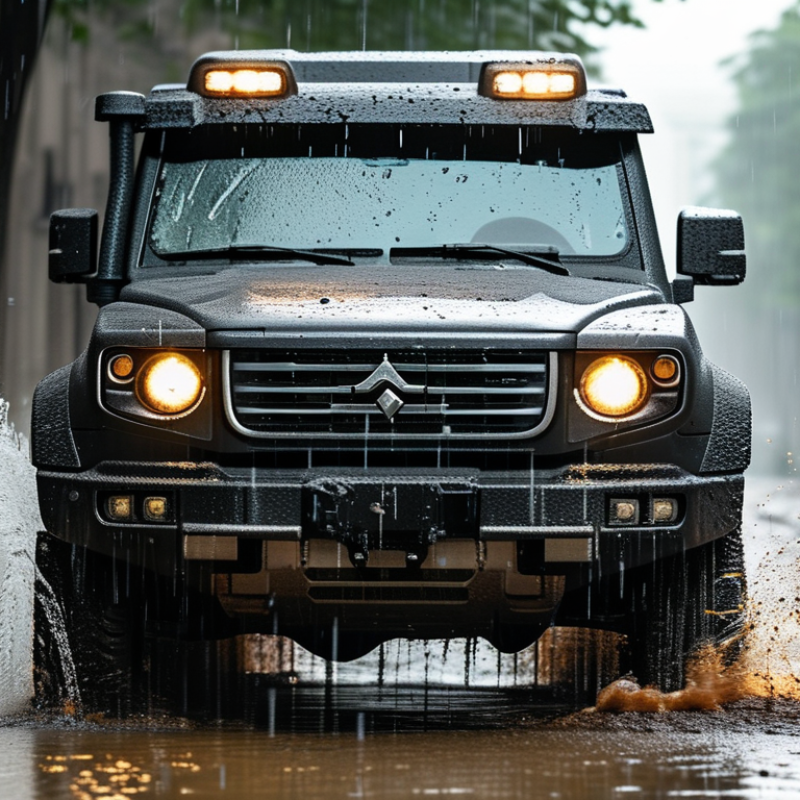
In real use, IP67 can offer valuable protection after a vehicle crosses a flooded section of road. It may also reduce risk when water collects around a camera housing. However, sealing quality, cable glands, connectors, lens bonding, and installation angle still matter. A strong rating cannot repair poor mounting. That is easy to overlook. IP67 is not always “better” in every situation; it is better for immersion exposure. For frequent high-pressure cleaning, IP66 remains essential. The most dependable vehicle camera usually carries both ratings, supported by documented testing and careful installation.
Why Is IP67 Better Than IP66 for Vehicle Cameras?

What IP66 and IP67 Ratings Mean for Vehicle Cameras

IP ratings describe enclosure protection under defined test conditions. In IP66, the first “6” means complete protection against dust. The second “6” means resistance to powerful water jets from every direction. For a vehicle camera, this matters during pressure washing, heavy rain, and muddy road spray.

IP67 also uses “6” for dust protection. Its “7” indicates protection during temporary immersion, usually up to one metre for 30 minutes under laboratory conditions. That helps when a camera faces deep puddles, flooded loading areas, or accidental submersion. However, IP67 does not automatically include IP66 water-jet protection. A camera marked IP66/IP67 has passed both tests. This distinction is easy to miss.

In practical vehicle installations, IP67 can offer stronger protection against unexpected water exposure. Yet mounting position still matters. A downward-facing camera may drain better than one with a water-trapping connector. Cable glands, seals, and unused ports need careful inspection. I have seen reliable enclosures fail because installation details were treated as minor. Testing also has limits. Road vibration, temperature changes, aging seals, and repeated high-pressure washing can exceed the original laboratory conditions. IP67 is therefore valuable, but it is not a guarantee against every outdoor failure.

How IP66 and IP67 Tests Measure Water and Dust Protection

For vehicle cameras, IP67 is often considered better than IP66 because it handles temporary immersion. Both ratings provide the same dust protection. The first number, 6, means the enclosure is dust-tight under IEC 60529 testing. No harmful dust should reach sensitive components.

The water tests differ. IP66 exposes the camera to powerful water jets from multiple directions. This simulates heavy rain, road spray, and pressure washing at a controlled distance. IP67 places the camera in fresh water, usually up to one metre deep, for about 30 minutes. Technicians then check for water entry and functional damage. A camera passing IP67 may still lack protection against strong jets. Therefore, IP66/IP67 certification is more useful for vehicles facing both spray and accidental submersion.

Tips: Ask for the complete test report, not only the rating label. Check whether cables, connectors, and mounting seals were tested together. Inspect seals after installation, especially near sharp body panels. Laboratory tests cannot fully reproduce vibration, mud, salt, or repeated temperature changes. That limitation matters. In real service, a damaged seal can defeat an excellent enclosure rating. I would also avoid assuming “higher” always means “stronger” in every condition. The test method decides the protection.

Why IP67 Provides Greater Water Resistance Than IP66

Why Is IP67 Better Than IP66 for Vehicle Cameras?

IP67 provides greater water resistance in one important situation: temporary immersion. Under IEC 60529 testing, an IP67 camera must resist dust and survive immersion in water up to one metre for about 30 minutes. This matters when a vehicle crosses flooded roads, enters deep puddles, or sits beneath melting snow.

IP66 follows a different test. It protects against powerful water jets from several directions, which is useful during heavy rain, roadside washing, or spray from passing trucks. However, IP66 does not automatically prove that the camera can survive submersion. That distinction is easy to miss.

IP67 is not simply “better” in every environment. Its immersion test does not replace the high-pressure jet test required for IP66. For demanding vehicle use, an IP66/IP67 rating offers broader protection. Check the installation angle, cable seals, connector design, and housing damage as well. A tiny crack can defeat a strong rating.

Practical inspection still matters. After installation, look for trapped moisture behind the lens. Condensation may indicate temperature changes, poor sealing, or internal humidity. The rating describes controlled testing, not every road condition. Fresh thinking helps here: water resistance is a system feature, not just a number printed on a camera.

Why Is IP67 Better Than IP66 for Vehicle Cameras?

Why IP67 Provides Greater Water Resistance Than IP66

IP66 protects against powerful water jets for a minimum test duration of 3 minutes, while IP67 is tested for temporary immersion in up to 1 metre of water for 30 minutes. This gives IP67 greater protection against accidental submersion, flooding, and heavy water exposure. The ratings use different water tests, so IP67 does not automatically replace IP66 jet protection; vehicle cameras requiring both protections are commonly specified with a combined IP66/IP67 rating.

How IP Ratings Affect Vehicle Camera Installation and Reliability

IP ratings directly shape vehicle camera installation and long-term reliability. IEC 60529 defines IP66 as dust-tight protection against powerful water jets. Its water test uses approximately 100 litres per minute. IP67 adds temporary immersion protection, typically up to one metre for 30 minutes. That makes IP67 better for cameras exposed to flooded roads, deep puddles, or careless washing. It is not automatically better in every condition.

The difference matters during installation. A camera mounted beneath a bumper can face standing water after heavy rain. Its connector may remain submerged while the lens stays dry. IP67 helps here. However, IP67 alone does not confirm resistance to strong water jets. A pressure washer can still force water through a poorly sealed cable entry. IEC 60529 treats jet protection and immersion as separate tests. Choose dual-rated protection when both conditions are expected.

ISO 16750, widely used for road-vehicle environmental testing, also highlights temperature, vibration, humidity, and mechanical stress. These factors can weaken seals over time. Technicians should route cables downward before the connector, secure them against vibration, and avoid sharp bends. Drainage matters too. Condensation is easy to overlook. In field inspections, many failures begin at the cable gland, not the camera housing. IP ratings describe tested protection, not perfect installation. That assumption is convenient, but incomplete.

Choosing Between IP66 and IP67 for Different Driving Environments

Why Is IP67 Better Than IP66 for Vehicle Cameras?

Choosing between IP66 and IP67 depends on the driving environment, not the number alone. IP66 cameras are dust-tight and resist powerful water jets. They suit highways, urban roads, and regular vehicle washing. IP67 cameras add protection against temporary immersion in water, usually up to one meter for 30 minutes. This helps when vehicles cross flooded streets, deep puddles, or muddy construction entrances.

IP67 is not automatically better in every situation. An IP67 rating does not always confirm protection against strong water jets. For pressure washing and temporary immersion, a camera carrying both IP66 and IP67 ratings is more suitable. That small distinction matters during real inspections.

Installation also changes the result. A damaged seal, loose connector, or poorly routed cable can defeat a strong enclosure rating. Water may enter through the cable path, not the camera body. Dust and vibration create another problem over time. Choose IP66 for controlled roads and frequent cleaning. Choose IP67 for unpredictable water exposure. For mixed conditions, dual-rated protection deserves closer attention. It costs more sometimes. The rating label cannot correct careless installation.

Why Is IP67 Better Than IP66 for Vehicle Cameras? - Choosing Between IP66 and IP67 for Different Driving Environments
Comparison Dimension IP66 IP67 Vehicle-Camera Implication
Ingress Protection Code IP66 IP67 The first digit is 6 in both ratings, while the second digit defines the water-resistance test.
Protection Against Solid Objects 6: Dust-tight 6: Dust-tight Both ratings provide the highest standard dust-protection level in the IP code, which is important for unpaved roads, construction areas, and dusty operating sites.
Water-Resistance Test 6: Protection against powerful water jets 7: Protection against temporary immersion in water IP66 is designed for strong surface water jets; IP67 is designed for short-term immersion under specified test conditions.
Immersion Protection Not indicated by the IP66 code Up to 1 metre of water for up to 30 minutes under IEC 60529 test conditions IP67 offers a useful advantage when a camera may be submerged briefly by flooding, deep puddles, or vehicle recovery operations.
Heavy Rain and Road Spray Well suited to heavy rain and road spray Suitable when the product has also been tested for water jets For direct spray from tyres, pressure washing, or high-pressure cleaning, confirm that the camera is specifically rated for IPX6 as well as IPX7.
Temporary Flooding or Deep Puddles Limited information about immersion resistance Better suited to brief accidental immersion IP67 generally provides greater protection when water can rise around the camera, but the installation must still prevent water entry through connectors and cable glands.
High-Pressure Washing More directly aligned with powerful-jet protection Do not assume IP67 alone provides IP66-level jet protection IP67 does not automatically mean IP66. For frequent pressure washing, select a camera documented as both IP66 and IP67, or with an equivalent higher dual rating.
Typical Driving Environment Highway vehicles, urban fleets, rainy roads, and routine exterior exposure Off-road vehicles, agricultural vehicles, emergency vehicles, flood-prone routes, and applications with immersion risk The better choice depends on whether powerful water jets or temporary immersion is the dominant hazard.
Connector and Cable Considerations Requires correctly sealed connectors and cable entries Requires correctly sealed connectors and cable entries, especially during immersion The IP rating applies to the tested enclosure configuration. Unsealed connectors, damaged gaskets, or poorly fitted cable glands can reduce real-world protection.
Temperature and Mechanical Stress Not defined by the IP code IP ratings do not specify vibration resistance, impact strength, operating temperature, corrosion resistance, or chemical resistance. These requirements should be checked separately for vehicle use.
Best Selection Rule Choose IP66 when powerful water jets and road spray are the primary concern. Choose IP67 when temporary immersion is the primary concern. For mixed conditions, a camera tested and marked for both IP66 and IP67 is usually the more practical choice.
Important: IP67 is not automatically a higher version of IP66 for every water exposure. The two ratings use different water tests, so the product specification should explicitly list both ratings when the camera must withstand heavy spray and temporary immersion.

FAQS

What does an IP66 rating mean for a vehicle camera?

It means complete dust protection and resistance to powerful water jets. This suits heavy rain, muddy spray, and careful pressure washing.

What does an IP67 rating add?

IP67 adds temporary immersion protection. Usually, the camera can survive one metre of water for 30 minutes in laboratory testing.

Is IP67 always better than IP66?

Not exactly. IP67 protects against immersion, but it does not automatically include powerful water-jet protection.

What rating suits cameras facing puddles or flooded areas?

IP67 offers useful protection against deep puddles and accidental submersion. Choose dual-rated protection when strong jets are also expected.

Can a pressure washer damage an IP67 camera?

Yes, it can. IP67 alone does not confirm resistance to powerful water jets. A weak cable seal may still admit water.

Which installation details affect camera reliability?

Route cables downward before connectors. Secure them against vibration. Inspect cable glands, seals, and unused ports carefully.

Does the camera housing provide complete outdoor protection?

No. IP ratings describe specific laboratory tests, not every outdoor condition. Vibration, aging seals, temperature changes, and repeated washing can exceed those tests.

Where do many water-related failures begin?

Often at the cable gland rather than the camera housing. Condensation and trapped water deserve attention. Small details can become expensive problems.

Does mounting position matter?

Yes. A downward-facing camera may drain better than one with a water-trapping connector. Position affects real-world protection.

How should technicians think about IP ratings?

Treat them as useful evidence, not a guarantee. The rating helps, but installation quality still needs honest inspection.

Conclusion

IP66 and IP67 are international protection ratings that describe how well vehicle cameras resist dust and water. Both ratings provide complete protection against dust, making them suitable for demanding road conditions. The key difference is water resistance: IP66 protects against powerful water jets from multiple directions, while IP67 also protects the camera during temporary immersion in water, typically up to a specified depth and duration. In simple terms, what is the difference between IP66 and IP67 for vehicle cameras? IP67 offers an additional layer of protection when water may collect around or cover the camera.

This difference can affect installation, service life, and reliability. IP66 may be sufficient for vehicles mainly exposed to rain, spray, and routine washing, especially when the camera is mounted in a well-protected position. IP67 is a stronger choice for off-road vehicles, construction equipment, flood-prone areas, or installations near wheels and underbody sections where temporary submersion is possible. Selecting the appropriate rating helps match the camera to its driving environment and reduces the risk of moisture-related performance problems.

Madeline

Madeline

Madeline is a dedicated marketing professional with a wealth of expertise in our company's core offerings. With a keen understanding of the industry, she brings a unique perspective to her role, consistently delivering high-quality content that highlights the superior aspects of our products. As......