The use of vehicle-mounted infrared lasers has grown in various fields, particularly in military and automotive applications. The question, "what is the maximum range of a vehicle-mounted infrared laser," remains crucial for professionals in these industries. Dr. Emily Chen, an expert in laser technologies, states, “Understanding the range of these systems is vital for effective deployment.” Her insights emphasize the importance of precise measurements in ensuring safety and efficiency.
Determining the maximum range involves several factors, such as the laser's power, beam divergence, and atmospheric conditions. Variations in terrain can also significantly impact performance. For example, urban settings with numerous obstacles present different challenges than open fields. This complexity can lead to uncertainties in the effective range of these devices, requiring continual assessment and adaptation.
Expert evaluations often reveal that the maximum range can vary widely. Some lasers may operate effectively within a few hundred meters, while others exceed several kilometers under optimal conditions. This disparity highlights the necessity for ongoing research and technology enhancements. The field must confront these nuances, as the stakes involve both operational success and safety in critical scenarios.
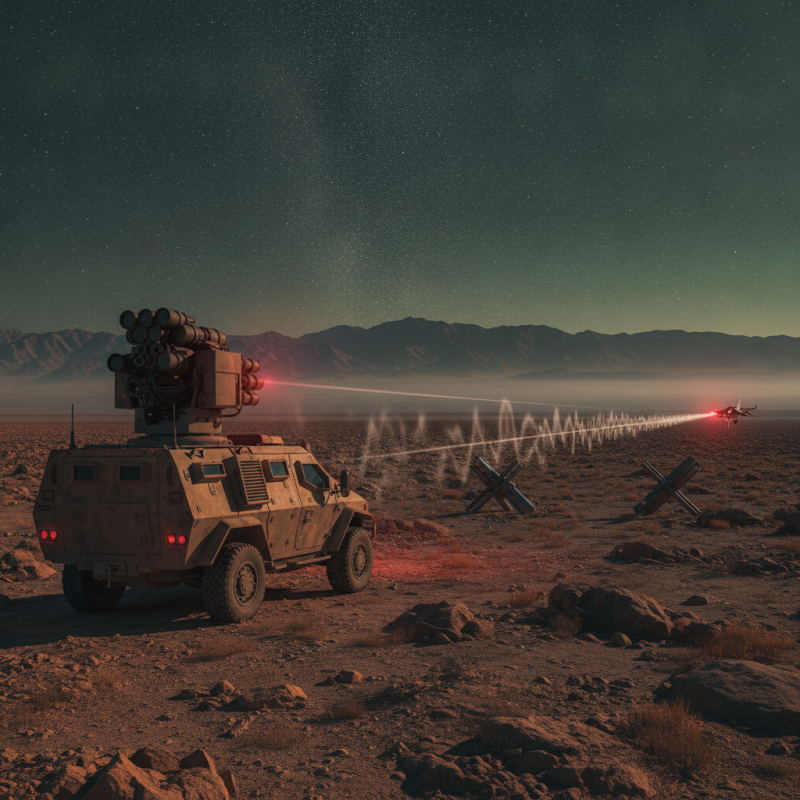
Vehicle mounted infrared lasers are becoming crucial in various applications, especially in defense and surveillance. These systems leverage infrared technology to enhance visibility and targeting accuracy in low-light conditions. According to a report from MarketsandMarkets, the global infrared laser market is projected to grow significantly, reaching over $12 billion by 2025. This data highlights the increasing reliance on such technologies in military and civilian sectors.
Understanding how these lasers operate is essential. Infrared lasers typically emit light at wavelengths greater than 700 nm, rendering them invisible to the naked eye. This feature allows vehicles equipped with these systems to avoid detection while maintaining superior targeting capabilities. Expert analysis shows that the effective range of these lasers can vary based on factors like atmospheric conditions and power output. For instance, some high-quality infrared systems can reach distances of several kilometers under optimal conditions.
However, challenges remain. The effectiveness of vehicle mounted infrared lasers can diminish in adverse weather, such as fog or heavy rain. Additionally, their reliance on line-of-sight targeting may complicate usage in urban environments with obstacles. Research indicates a need for continuous innovation in this area to improve performance in diverse conditions. Addressing these limitations will be critical for maximizing the potential of vehicle mounted infrared laser systems.
Infrared lasers mounted on vehicles offer impressive capabilities. However, their effective range depends on several critical factors. Environmental conditions play a significant role. For instance, fog, rain, or dust can scatter the laser beam, reducing visibility. The presence of obstacles can also hinder performance. As a result, operators must consider their surroundings carefully.
The power output of the laser is another essential aspect. Higher power levels typically extend range, but they also generate more heat. This heat can affect the laser's consistency and reliability over time. Additionally, the wavelength of the infrared laser matters. Shorter wavelengths can penetrate obstacles more effectively but may be affected by atmospheric conditions.
User experience and training also significantly impact the effective range. Operators who understand the nuances of their equipment can adapt to different conditions. They may adjust for environmental changes and find the best firing angles. Constant practice and simulation help refine these skills. Reflecting on these factors allows for improved performance and safer operations.
Measuring the range of vehicle-mounted infrared lasers requires specific methods and techniques. One common approach is using a laser rangefinder. These devices can provide real-time distance measurements. They are precise and helpful for assessing performance in various environments. However, factors like terrain and atmospheric conditions can affect accuracy.
Another method involves conducting field tests. In these tests, operators position the laser system at predefined distances. Observing the system's effectiveness over varying ranges can yield useful data. Data collected might reveal limitations in performance that aren't evident in controlled settings. Additionally, using photodetectors can help assess signal strength at different distances. This method is crucial for understanding how distance affects detection and targeting.
While these methods are effective, they are not without flaws. Environmental variables can introduce inconsistencies in results. Engineers must also consider the effect of different materials on laser penetration. The range could vary depending on the target's surface. Continuous evaluation and adjustment are essential to ensure the system meets operational requirements. Finding a balance between complexity and reliability is vital in these assessments.
When assessing the maximum range of vehicle-mounted infrared lasers, environmental conditions play a crucial role. Factors such as humidity, temperature, and atmospheric clarity can significantly impact laser performance. For instance, high humidity can scatter infrared light, reducing the effective range by up to 30% in some conditions. A study by the U.S. Army Research Laboratory indicates that clear atmospheric conditions can enhance laser range by as much as 50%, emphasizing the need for precise environmental assessments during deployment.
Temperature fluctuations also have implications. When temperatures drop significantly, the laser may undergo thermal distortion, leading to decreased accuracy at longer ranges. This is particularly vital in cold climates where range can diminish unexpectedly. Furthermore, particulate matter in the atmosphere can impede laser propagation, creating a challenge for long-distance targeting. Research shows that urban settings, often filled with dust and smoke, could render infrared systems less effective, requiring tactical adjustments and mitigation strategies.
Evaluating these environmental influences is essential for optimizing laser usage. Crews should integrate real-time atmospheric monitoring technology to adjust their operations accordingly. Understanding these dynamics can prevent over-reliance on systems that might falter under specific conditions. Such insights not only enhance effectiveness but also drive innovations in design and operational protocols.
| Environmental Condition | Effect on Infrared Laser | Max Range (meters) | Temperature (°C) |
|---|---|---|---|
| Clear Atmosphere | Optimal performance | 5000 | 25 |
| Foggy Conditions | Significant attenuation | 1500 | 15 |
| Rain | Reduced effectiveness | 2000 | 20 |
| Snow | High reflection and scattering | 1000 | 0 |
| Smog | Moderate attenuation | 2500 | 20 |
Infrared lasers are increasingly common in vehicle-mounted applications. They serve various purposes, including distance measurement and target acquisition. However, evaluating their range involves more than just knowing the specifications. Environmental factors play a crucial role in performance. Fog, rain, and dust can significantly affect the effective range of infrared lasers.
One limitation is the absorption of infrared light by certain materials. For example, specific atmospheric conditions can hinder their performance. Operators must account for these variables in real-time. A thorough understanding of these limitations is essential for accurate range evaluation. Weaknesses in technology may lead to overestimations of range. It is vital for users to conduct practical tests under varying conditions.
Additionally, experts suggest that continuous training is necessary for operators. Familiarity with the equipment and its limitations can enhance effectiveness. Gathering data from multiple scenarios will improve decision-making processes. Relying solely on manufacturer claims may not provide a complete picture. Each user’s experience adds a layer of perspective necessary for reliable operations.
: A laser rangefinder is often used. It provides real-time distance measurements.
Field tests allow operators to observe effectiveness over predefined distances. This provides useful performance data.
Terrain and atmospheric conditions can significantly alter accuracy. These variables introduce inconsistencies.
Photodetectors assess signal strength at different distances. They are crucial for understanding detection performance.
Environmental conditions like fog and dust can limit range. Operators must account for these factors in evaluations.
Certain materials absorb infrared light. This can hinder performance and lead to overestimations of effective range.
Continuous training improves familiarity with limits, enhancing efficiency. It is vital for effective operation.
Practical tests provide a clearer picture of a system's performance. Relying solely on specifications can be misleading.
Understanding technology limitations is essential. Continuous adjustment and evaluation are necessary for operational effectiveness.
Finding the right balance between complexity and reliability is key. Overlooking this may impact performance outcomes.
Vehicle-mounted infrared lasers are critical tools in various applications, and understanding their capabilities is essential for effective deployment. This article explores what is the maximum range of a vehicle-mounted infrared laser, highlighting key factors that influence this range, such as laser power, beam divergence, and atmospheric conditions.
Methods for measuring the range of infrared laser systems are discussed, along with the environmental factors that can impact performance, including temperature, humidity, and terrain. The article concludes by examining the applications of infrared lasers and their limitations in range evaluation, shedding light on the complexities involved in optimizing their use in the field.

HawkEye Camera