What Is Multi Device Sync for Joint Command?

Time:2026-09-08 Author:Mason
0%

Multi-device synchronization for joint command connects mobile terminals to a shared operational picture. It keeps approved users aligned with the same tasks, locations, messages, and status updates. The goal is not simply faster communication. It is consistent decision-making under changing conditions.

Teams asking how to sync multiple mobile terminals for joint command should examine four foundations: identity, connectivity, data timing, and authority. Each terminal needs verified credentials and a clearly defined role. A secure coordination platform can distribute updates through encrypted channels, while timestamps help users recognize stale information. For example, a field tablet may show a revised task at 10:42:16, while another device remains offline. The system should flag that mismatch rather than hide it. Small details matter.

Bruce Schneier, a respected security technologist, said, “Security is a process, not a product.” His observation applies directly to synchronized command systems. Reliable deployment requires access controls, device management, audit records, software updates, and tested recovery procedures. It also requires human review. Automation can reduce delays, but it cannot resolve every conflicting instruction or ambiguous report. That weakness should remain visible.

A practical design should support temporary disconnections, controlled data sharing, and clear confirmation states. Users should know whether a message was sent, received, or merely queued. Testing should include crowded networks, low battery conditions, and delayed GPS signals. No platform is perfect. The strongest systems acknowledge these limits and improve through measured exercises, incident reviews, and transparent operational feedback.
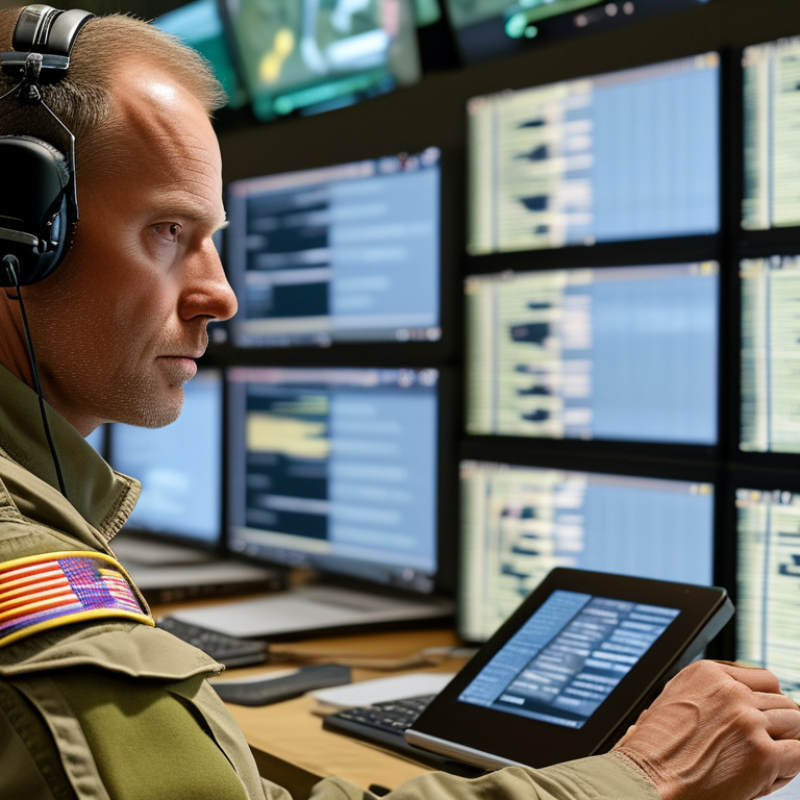
What Is Multi Device Sync for Joint Command?

Define Multi-Device Sync for Joint Command as a Shared Operational Model

What Is Multi Device Sync for Joint Command?

Multi-device sync for joint command is a shared operational model, not merely a technical connection. It lets authorized teams view the same mission state across phones, tablets, vehicles, and control rooms. Each device receives consistent updates about tasks, locations, priorities, and resource status. The objective is shared understanding.

A reliable model begins with clear roles. One coordinator may approve changes, while field teams report observations. Every update should show its source, timestamp, and confidence level. That detail matters when two teams submit different information about the same site. A synchronized map can display a temporary access route, a damaged communications point, and the team assigned to inspect it. Small details prevent large misunderstandings.

The system must also work when connectivity weakens. Devices should retain the last verified data and mark it clearly as outdated. New reports can queue locally, then synchronize after reconnection. Security controls should limit sensitive actions by role, device, and operating context. Audit records support later review without blaming individuals too quickly. Errors happen.

Experience from coordinated operations shows that synchronization alone does not create trust. Teams need shared terminology, practiced handoffs, and regular communication checks. A status color may seem obvious, yet different units can interpret it differently. That weakness deserves attention. Joint exercises should test delayed updates, conflicting reports, battery loss, and unclear authority. The model improves when people examine those uncomfortable moments instead of hiding them.

Establish Timing with IEEE 1588 PTP and ITU-R’s 1 ms 5G Target

Multi-device joint command depends on more than sending identical instructions. Each device must understand when an action should occur. IEEE 1588 Precision Time Protocol, or PTP, provides a shared time base across controllers, sensors, and actuators. A grandmaster clock distributes timing messages through the network. Hardware timestamping can reduce uncertainty at each interface.

The 1 ms 5G target from ITU-R is useful, but it needs careful interpretation. It generally describes radio interface latency under defined conditions. It does not guarantee a complete system response within one millisecond.

Processing, queuing, transport, and actuator delays still matter. Engineers should measure the entire path, not only the wireless link.

Timing errors become visible in small details. A camera trigger may arrive one frame late. Two motors may start with a slight vibration between them. PTP boundary clocks, transparent clocks, and stable holdover sources can improve consistency. Network asymmetry deserves attention. A five-microsecond path difference may seem harmless, yet repeated errors can disturb tightly coordinated motion.

Perfect synchronization is rarely permanent. Temperature, congestion, cable changes, and clock drift all interfere. Test logs should record offset, delay variation, packet loss, and recovery behavior. A controlled laboratory result can look impressive, but field conditions are less forgiving. The difficult question is not whether devices share time. It is whether they still act together when that time becomes imperfect.

Map Identity, State, Transport, and Conflict-Control Layers

What Is Multi Device Sync for Joint Command?

Multi-device sync for joint command means several devices share control without losing context. It lets operators coordinate actions across tablets, consoles, sensors, and mobile terminals. The design begins with four connected layers. Identity confirms who may act and which device belongs to that person. State records current tasks, permissions, positions, and recent changes. I have found that weak identity mapping creates confusion before technical failures appear. Each device should receive a clear, traceable identity.

State synchronization shows every approved device the same operational picture. A tablet displaying a changed task should update nearby terminals quickly. Transport carries these updates through approved network paths. Reliable systems handle delays, dropped messages, and temporary disconnections. Still, perfect delivery is an unrealistic assumption. Conflict control decides what happens when two operators change one task simultaneously. A simple version uses timestamps, authority levels, and explicit review steps. Operators should see warnings, not silent overwrites. That detail builds trust.

Tips: Keep identity records short and current. Record who changed each state, when, and why. Test synchronization with weak connectivity and stale data. Review conflict rules with real operators, not only engineers. One overlooked device can distort the shared picture. Document recovery steps in plain language. I would also challenge automatic priority rules regularly, because an efficient rule can still produce the wrong decision in an unusual situation.

What Is Multi-Device Sync for Joint Command?

Multi-device synchronization coordinates the same command across several devices by separating identity, state, transport, and conflict-control responsibilities.

This responsibility matrix reflects a common distributed-system design. A value of 1 means the layer directly owns that capability, while 0 means the capability is normally handled by another layer. Identity prevents unauthorized or duplicate command sources; state tracks versions and snapshots; transport delivers events; and conflict control resolves concurrent or out-of-order updates.

Scale Coordination Toward ITU-R’s 1 Million Devices per km² Benchmark

What Is Multi Device Sync for Joint Command?

Multi-device sync for joint command coordinates many endpoints around one shared operational timeline. Each device receives the same instruction, sequence, and timing reference. Instead of reacting independently, sensors, vehicles, and control units can act as one distributed system. Timing is everything. A delay of 20 milliseconds may be harmless in monitoring, but serious during coordinated industrial movement.

The larger challenge is scale. ITU-R’s benchmark of one million devices per square kilometre suggests an extremely dense communication environment. Reaching that level requires efficient signaling, local processing, spectrum discipline, and reliable identity management. Sending every message through one central controller would create congestion. Edge coordination can reduce traffic by handling routine decisions near the devices. Short commands also matter. A compact status packet wastes less capacity than repeated full reports.

A practical validation plan should begin with a small zone, such as a warehouse aisle containing 100 synchronized units. Engineers can measure clock drift, missed commands, recovery time, and battery use. They should test walls, interference, device failures, and sudden traffic spikes. The design is not flawless. More synchronization can also increase overhead and power consumption. That trade-off deserves honest measurement, not optimistic charts. The one-million-device target is a useful direction, but it is not a universal deployment guarantee. Density, spectrum availability, safety controls, and local infrastructure still determine what works.

Validate Failover, Auditability, and Human Override in Joint Operations

What Is Multi Device Sync for Joint Command?

Multi-device sync keeps a shared operational picture aligned across command tablets, vehicle terminals, and wall displays. In a joint exercise, one coordinator may update a road closure while another monitors medical capacity. Each authorized device should receive the change within seconds. The system must also show its last successful update. “Current” is not enough. Operators need evidence.

Failover testing should remove the primary connection, then measure recovery time, missing records, and conflicting edits. A visible status panel can show device health, clock drift, and unsent actions. Auditability depends on more than storing logs. Every change should identify the user role, timestamp, device, reason, and approval path. Logs should remain readable during pressure. A sealed export can support later review without exposing unnecessary personal information.

Human override remains essential when synchronization behaves unexpectedly. A supervisor may freeze an unsafe instruction, reject a stale update, or restore the last verified state. The interface should make that decision deliberate, not accidental. Clear warnings help. Silent automation does not. Field exercises often reveal a weakness: teams test network loss, but rarely test tired operators. That gap deserves attention. No design is flawless. Regular drills, independent review, and honest incident notes improve trust more than polished dashboards.

What Is Multi Device Sync for Joint Command? - Validate Failover, Auditability, and Human Override in Joint Operations

Operational validation matrix for synchronized command devices, resilient failover, traceable decisions, and controlled human intervention.

Devices in Test Group 24 endpoints
Synchronization Target ≤ 2 seconds
Failover Recovery Target ≤ 60 seconds
Audit Record Target 100% of critical actions
Multi-Device Synchronization and Joint Command Validation Dataset
Validation Area Operational Scenario Measured Dimension Acceptance Target Observed Result Evidence Source Status Control or Human Override Requirement
State Synchronization Normal multi-device operation Median command-state propagation time ≤ 2 seconds 1.3 seconds Timestamp comparison across 24 devices Pass Display the state age and identify devices that exceed the synchronization threshold.
State Synchronization High message volume 95th-percentile propagation time during 120 events per minute ≤ 5 seconds 4.1 seconds Event-stream performance log Pass Prioritize safety-critical events and queue lower-priority updates without silently discarding them.
Data Integrity Concurrent updates from separate command posts Conflicting updates requiring reconciliation 100% detected 18 of 18 detected Conflict-resolution test records Pass Require an authorized human decision when automated precedence rules cannot safely resolve the conflict.
Failover Primary coordination node unavailable Recovery time objective ≤ 60 seconds 42 seconds Controlled node-failure exercise Pass Show the active coordinator, standby readiness, failover time, and any commands paused during transition.
Failover Intermittent network partition Recovery point objective for confirmed commands Zero lost confirmed commands 0 lost; 3 delayed Command ledger and reconciliation report Pass Mark delayed or duplicated messages clearly and prevent automatic execution of ambiguous commands.
Device Continuity Temporary loss of one field device Time to restore current operational state after reconnection ≤ 30 seconds 19 seconds Reconnect and state-replay log Pass Require an explicit stale-state warning until the device confirms receipt of the current state.
Auditability Critical command approval and execution Actions with actor, time, source device, reason, and result recorded 100% 100% of 146 actions Immutable audit export Pass Keep records append-only, use synchronized time references, and retain the original command context.
Auditability Post-event investigation Time required to reconstruct the command sequence ≤ 10 minutes 7 minutes 34 seconds Replay exercise using audit records Pass Support chronological replay, filtering by device or operator role, and export of supporting evidence.
Human Override Automated recommendation conflicts with authorized operator judgment Override completion time and reason capture ≤ 15 seconds; reason required 11 seconds; 100% reasons captured Human-in-the-loop exercise Controlled Allow authorized personnel to pause, reject, or replace an automated action while preserving the pre-override state.
Human Override Emergency stop or command cancellation Propagation of cancellation to connected devices ≤ 5 seconds 3.2 seconds Emergency cancellation drill Pass Use a distinct visual alert, require confirmation of receipt, and escalate devices that remain unacknowledged.
Access Governance Operator role changes during an active operation Time for permissions to update across devices ≤ 60 seconds 47 seconds Role-change propagation log Pass Revoke former permissions immediately where possible and display any device operating with cached privileges.
Resilience Monitoring Degraded synchronization or missing acknowledgements Alert generation time after threshold breach ≤ 10 seconds 8 seconds Monitoring and alert-timing report Review Escalate persistent degradation to the duty controller and require an operational decision on whether to continue.

FAQS

: What is multi-device synchronization for joint command?

: It lets authorized tablets, terminals, sensors, and displays share the same operational picture. A changed task should appear across connected devices within seconds.

Which layers support reliable synchronization?

Four layers work together: identity, state, transport, and conflict control. Identity confirms access. State records changes. Transport carries updates. Conflict control manages simultaneous edits.

Why is device identity important?

Each device needs a clear, traceable identity linked to its authorized user. Weak identity mapping can create confusion before technical failures appear.

What information should synchronized state include?

State may include tasks, permissions, positions, recent changes, and update status. Operators also need the last successful update time. “Current” is not enough.

How should systems handle delayed or missing updates?

They should tolerate weak connections, dropped messages, stale data, and temporary disconnections. A status panel can show device health, clock drift, and unsent actions. Perfect delivery is unrealistic.

What happens when two operators edit one task?

Conflict rules may use timestamps, authority levels, and review steps. The system should display warnings instead of silently overwriting changes. Silent automation is risky.

How should failover testing be performed?

Remove the primary connection and measure recovery time, missing records, and conflicting edits. Repeat the test under weak connectivity. The results may expose uncomfortable gaps.

What makes synchronization auditable?

Each change should record the user role, time, device, reason, and approval path. Readable logs support later review. Keep personal information limited.

Why is human override necessary?

A supervisor may freeze an unsafe instruction, reject stale data, or restore a verified state. The interface should make this choice deliberate and visible. People still matter.

How can teams improve long-term reliability?

Run regular drills, review conflict rules, and document recovery steps in plain language. Test with tired operators, not only engineers. Dashboards alone cannot prove readiness.

Conclusion

Multi-device sync for joint command is a shared operational model that enables distributed mobile terminals to act on the same mission picture, timing reference, and command priorities. This approach explains how to sync multiple mobile terminals for joint command by aligning device identity, operational state, communication transport, and conflict-control rules. Precision timing, supported by IEEE 1588 PTP principles and a 1 ms 5G synchronization target, helps ensure that status updates, instructions, and coordinated actions are interpreted consistently across the network.

As the system expands toward a benchmark of one million devices per square kilometer, synchronization must remain scalable, resilient, and transparent. The design should include layered coordination, efficient state exchange, graceful handling of delayed or conflicting messages, and clear records for later review. Validation should test link loss, device replacement, recovery procedures, auditability, and authorized human override. Together, these measures create a dependable framework for joint operations in which coordination remains orderly even when connectivity, timing, or device availability changes.

Mason

Mason

Mason is a seasoned marketing professional with a deep expertise in the company's offerings and a passion for driving brand awareness. With a strong background in digital marketing strategies, he has an innate ability to connect with diverse audiences and effectively communicate product benefits.......