Why Know the Legal Regulations for Car Mounted Surveillance?

Time:2026-10-08 Author:Madeline
0%

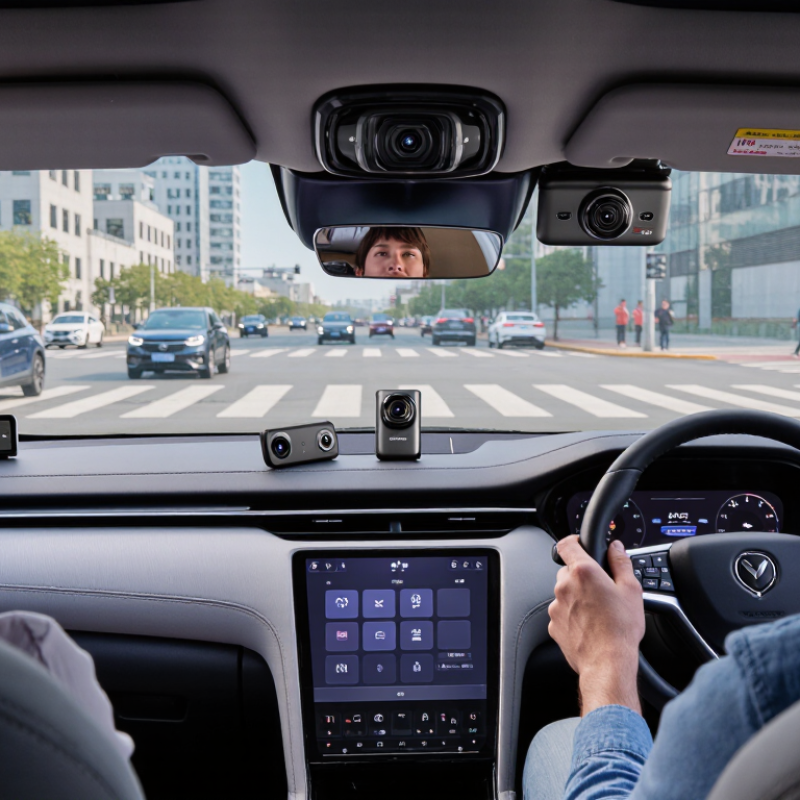
Car-mounted surveillance is no longer limited to police vehicles or large logistics fleets. Dash cameras, GPS trackers, cabin cameras, and connected telematics now record roads, drivers, passengers, and nearby pedestrians. The National Highway Traffic Safety Administration reported 40,901 traffic fatalities in the United States during 2023. This continuing safety concern explains the demand for reliable vehicle video. However, safety benefits do not automatically override privacy rights. The important question is: what are the legal regulations for car-mounted surveillance?

The answer depends on location, equipment, purpose, and data handling. The European Data Protection Board treats vehicle recordings as personal data when individuals or license plates are identifiable. The UK Information Commissioner’s Office also recommends clear purpose limitation, restricted access, and controlled retention for video surveillance. Audio recording can create additional concerns. In the United States, federal rules interact with state privacy, recording, employment, and traffic laws. California, for example, applies broader consumer privacy requirements than many other states.

Security risks deserve equal attention. Verizon’s 2024 Data Breach Investigations Report found that the human element contributed to 68% of breaches. A forgotten memory card, shared cloud password, or exposed dashboard screen can turn useful evidence into a privacy incident. Small details matter. A camera aimed at the road differs from one aimed continuously at passengers. A seven-day retention period differs from indefinite storage. Organizations should document necessity, provide appropriate notice, protect footage, and review local requirements before deployment. This is not always straightforward. Regulations change, and practical guidance can lag behind new vehicle technology. Therefore, responsible operators should consult qualified legal professionals and revisit their policies regularly.
Why Know the Legal Regulations for Car Mounted Surveillance?

Legal Foundations of Car-Mounted Surveillance

Car-mounted surveillance rests on more than a camera fixed behind the windshield. It depends on lawful purpose, vehicle ownership, location, and the people recorded. In many jurisdictions, video in public spaces may be permitted, but privacy expectations still matter. Private driveways, apartment garages, and workplaces can require consent or clear notice. Audio is often more restricted than video. A microphone may capture a conversation unintentionally, creating a separate compliance problem. Local rules can also govern license plates, faces, children, and cross-border data transfers. That variation makes one global rule impossible.

Practical compliance usually begins with a written purpose and a limited recording area. Recording traffic incidents differs from continuously monitoring neighbors. Keep footage only as long as necessary for that purpose. Restrict access with strong passwords and maintain an access log. Provide visible notice when local law requires it. Document deletion dates, correction requests, and lawful disclosure requests. Employee use may require additional notices, agreements, or workplace consultation. Legal review should happen before installation, especially for fleet vehicles. Even careful policies can miss local exceptions. A policy can still be incomplete. Convenience is not proof of permission. A qualified privacy lawyer or local authority can test the plan against current rules.

Privacy Rights and Consent Requirements

Understanding privacy rights is essential before installing a surveillance camera in a vehicle. A public road does not remove every expectation of privacy. A camera near the windshield may record faces, license plates, conversations, or private property. Each detail can create legal responsibilities.

Consent rules differ by country, state, and situation. Audio recording often requires stricter consent than video. Some jurisdictions require every recorded person to agree. Others permit recording when one participant knows about it. Do not assume a passenger’s silence means consent. Explain the camera’s purpose, recording areas, and storage period clearly. Written consent is safer for employees, passengers, and recurring drivers. A visible notice can help, but it may not replace consent where local law demands it.

Use the least intrusive setting that meets a genuine safety need. Disable audio when it is unnecessary. Limit recordings to relevant road views, and avoid filming inside private spaces. Protect stored files with access controls and encryption. Delete them when the stated retention period ends. People may ask what was recorded, why it was kept, or whether it was shared. A clear response process shows professional care. Local privacy authorities and qualified legal professionals can clarify uncertain requirements. I have found that convenience often encourages excessive recording. That instinct deserves review. A camera should support safety, not quietly become a permanent record of everyone nearby.

Rules for Recording Audio, Video, and License Plates

Why Know the Legal Regulations for Car Mounted Surveillance?

Car-mounted cameras can record roads, drivers, passengers, and license plates. Each category creates different legal risks. Video may be allowed in public areas, but privacy expectations still matter. License plates can become personal data when linked to an identifiable person. Rules differ by country, state, and recording purpose.

Audio is different. Many jurisdictions require consent from one or all participants before recording private conversations. A continuously active microphone may create greater risk than a video-only system. The safest approach is often disabling audio unless a clear legal basis exists. Keep it narrow.

The 2022 Traffic Safety Facts report from the National Highway Traffic Safety Administration recorded 3,308 deaths involving distracted driving in the United States. Recording equipment must never encourage drivers to adjust settings while moving.

A compliant setup should display a clear notice when practical. It should explain the purpose, retention period, and contact method for privacy requests. Store footage securely, restrict access, and delete routine recordings promptly. Do not collect every plate indefinitely. That feels convenient, but it may be excessive.

Industry privacy guidance also supports data minimization and purpose limitation for surveillance systems. My own concern is that many installation guides discuss camera angles, but barely mention deletion controls. That is an avoidable gap. A camera pointed at a driveway, school entrance, or neighboring window may capture more than intended. Test the view carefully, document the decision, and review local requirements before recording.

Permitted Uses and Responsibilities of Surveillance Data

Car-mounted surveillance can support road safety, incident review, and insurance documentation. Yet permitted use depends on purpose, location, and local privacy law. License plates and recognizable faces may become personal data. The European Data Protection Board stresses necessity and proportionality when processing publicly visible information. In practice, a camera should record only what the stated purpose requires. Wide, continuous recording may create unnecessary exposure.

Responsibility continues after recording. Organizations should document a lawful basis, provide clear notice, limit access, and set a short retention period. Sharing footage with insurers, authorities, or other parties requires careful justification. The IAPP’s 2024 US State Comprehensive Privacy Laws Report identified 20 states with broad privacy laws, showing why one policy may not fit every region. Security matters too. Verizon’s 2024 Data Breach Investigations Report found that the human element contributed to 68% of breaches. Weak passwords and careless downloads remain realistic risks. Regulations are not always clear. That is worth admitting.

Tips: Use visible notices where required. Disable unnecessary audio. Blur faces before routine sharing. Keep an access log. Review footage retention monthly. Test deletion procedures, not just written policies. Store recordings with encryption and role-based permissions. If footage captures a private driveway or sensitive event, pause before exporting it. A documented review can prevent an innocent safety tool from becoming excessive surveillance.

Why Know the Legal Regulations for Car Mounted Surveillance? - Permitted Uses and Responsibilities of Surveillance Data

Surveillance Data Type Generally Permitted Purpose Key Legal Consideration Main Responsibility Recommended Safeguard
Forward-facing road video Documenting collisions, dangerous driving, road hazards, and traffic incidents. Recording should be relevant and proportionate to the stated safety or evidentiary purpose. Limit collection to what is reasonably necessary and prevent unrelated use. Use a narrow camera angle, privacy masking, and automatic overwriting.
Rear and side camera footage Supporting accident reconstruction, parking-event documentation, and vehicle safety reviews. Additional camera views increase the amount of personal information collected. Justify each camera angle and ensure that the system does not capture excessive private areas. Disable unnecessary views and apply configurable privacy zones.
Audio recordings Usually limited to a clearly defined safety or operational purpose where legally allowed. Audio interception and consent rules may be stricter than video rules and vary by jurisdiction. Obtain the required consent or other lawful basis before recording conversations. Keep audio disabled by default unless a documented legal assessment supports it.
License plates Identifying vehicles involved in collisions, theft, or alleged traffic violations. A license plate can constitute personal data when it can be linked to an individual. Use plate information only for a specified, legitimate purpose and restrict access. Mask unrelated plates and delete them when the relevant purpose ends.
Images of pedestrians and passengers Incident investigation, vehicle security, and protection of people or property. Individuals may have privacy rights even when they are recorded in a public place. Avoid unnecessary identification and provide appropriate privacy information where required. Use face blurring, restricted access, and clear privacy notices where applicable.
GPS location and route history Vehicle recovery, route safety analysis, emergency response, and operational planning. Continuous location tracking can create a detailed profile of a person's movements. Define the monitoring purpose, limit retention, and avoid using location data for unrelated decisions. Collect location at appropriate intervals and apply role-based access controls.
Speed, braking, and impact data Safety investigations, driver training, maintenance, and collision analysis. Data should be accurate, relevant, and interpreted with appropriate technical context. Correct errors and avoid making significant decisions solely from unreliable automated data. Maintain calibration records and provide human review for disciplinary decisions.
Facial recognition or biometric analysis Only in narrowly defined circumstances where specifically authorized and legally justified. Biometric identification is highly sensitive and may be prohibited or subject to strict conditions. Complete a documented legal and privacy assessment before deployment. Do not enable biometric functions by default; use strong access and deletion controls.
Footage shared with insurers or authorities Processing claims, reporting suspected offenses, or responding to a valid legal request. Disclosure should have a lawful basis and should be limited to relevant material. Verify the recipient, document the disclosure, and protect the original evidence from alteration. Use secure transfers, access logs, file integrity checks, and disclosure records.
Public or social-media publication Limited public-interest communication or safety warnings after careful review. Public posting can cause unjustified identification, harassment, defamation, or privacy violations. Remove faces, voices, plates, addresses, and other identifiers unless publication is clearly justified. Use anonymization and obtain legal review before publication.
Employee or contractor monitoring Fleet safety, compliance, incident response, and protection of vehicles or cargo. Employment monitoring generally requires transparency, necessity, proportionality, and respect for local labor rules. Inform drivers in advance about what is collected, why it is collected, and how long it is retained. Provide a written monitoring policy and prohibit monitoring in private situations where feasible.
Retention of routine footage Temporary storage until the footage is no longer needed for the stated purpose. Privacy laws commonly require storage limitation and deletion when data is no longer necessary. Set a documented retention period and preserve only footage subject to a valid investigation or legal hold. Use automatic deletion, retention schedules, and periodic deletion audits.
Requests for access or deletion Allowing individuals to exercise applicable privacy rights concerning their personal data. Rights and response deadlines differ by jurisdiction, and exemptions may apply to investigations or third-party privacy. Verify the requester, locate relevant footage, protect other individuals' information, and respond within the applicable period. Maintain a rights-request procedure and securely redact unrelated people.
Cloud storage and remote access Centralized investigation, backup, fleet administration, and controlled evidence sharing. Transferring data to another country or service provider may trigger additional contractual and regulatory requirements. Select trustworthy processors, document processing arrangements, and control international transfers. Encrypt data in transit and at rest, use multi-factor authentication, and review access logs.
Security incidents or data breaches Incident response, containment, investigation, and legally required notification. Some laws require notification to regulators or affected individuals within specific time limits. Detect, document, contain, and assess unauthorized access, loss, or disclosure promptly. Maintain an incident-response plan, backups, audit trails, and staff training.
Legal requirements vary by country, state, province, recording location, and purpose. A local privacy, employment, and communications-law assessment should be completed before deploying or expanding vehicle-mounted surveillance.

Penalties for Violating Surveillance Regulations

Why Know the Legal Regulations for Car Mounted Surveillance?

Penalties for violating surveillance regulations can be severe, even when a camera records ordinary road activity. Privacy authorities may impose fines, require footage deletion, or restrict future monitoring. Under the GDPR, penalties can reach €20 million or 4% of global annual turnover, whichever is higher. The 2024 DLA Piper GDPR Fines and Data Breach Survey reported more than €4.5 billion in cumulative fines since 2018. That figure shows how quickly privacy mistakes become financial problems.

Rules also depend on location, recording purpose, audio capture, and data storage. A camera aimed through a windscreen may capture faces, number plates, private conversations, or a child entering a vehicle. Each detail can change the legal assessment. Industry privacy guidance repeatedly recommends clear notices, limited retention, access controls, and documented deletion procedures. The 2024 Verizon Data Breach Investigations Report found that the human element remained involved in 68% of breaches, reinforcing the need for trained operators. Small errors matter.

A practical compliance check should record why filming is necessary, who can view it, and when footage disappears. Audio deserves extra caution. Consent requirements vary widely. I once assumed visible equipment was enough notice; it is not always. Local advice may still be necessary.

Why Know the Legal Regulations for Car-Mounted Surveillance?

Maximum turnover-linked penalty ceilings under selected privacy laws that may apply when vehicle-mounted cameras collect identifiable personal data.

These figures represent statutory maximums, not automatic fines. Regulators consider factors such as severity, duration, cooperation, prior violations, affected individuals, and whether the surveillance was lawful and proportionate. The EU GDPR and UK GDPR allow fines of up to 4% of worldwide annual turnover; Brazil’s LGPD allows up to 2% of Brazilian revenue, capped at R$50 million per infraction; Australia’s Privacy Act allows up to 30% of adjusted turnover for serious or repeated interferences with privacy.

Sources: EU GDPR Article 83 · UK Data Protection Act 2018 · Brazil LGPD Article 52 · Australia Privacy Act 1988

FAQS

Is recording public roads always legal?

Not always. Public-road recording may be permitted, but privacy expectations still matter. Local rules can regulate faces, plates, children, and storage.

Can a vehicle camera record private driveways or apartment garages?

It may require consent or clear notice. Aim the camera narrowly, and avoid neighboring windows or private entrances. Test the view before recording.

Is recording audio riskier than recording video?

Yes. Audio is different. Some places require consent from one or all conversation participants. Disabling the microphone is often the safer choice.

How should license-plate footage be handled?

Treat plates as potentially personal data when they identify someone. Do not collect every plate indefinitely. Keep only footage linked to a clear purpose.

What notice should be provided?

A visible notice should explain the recording purpose, retention period, and privacy contact method when local law requires it. Small signs may not answer every question.

How long should surveillance footage be stored?

Store footage only as long as necessary for the stated purpose. Delete routine recordings promptly, and document deletion dates. Convenience is not proof of permission.

Who should be allowed to view the recordings?

Limit access to trained, authorized people. Use strong passwords and maintain an access log. Human mistakes remain a serious weakness.

What can happen after unlawful recording?

Authorities may require deletion, restrict future monitoring, or impose substantial fines. The result depends on location, audio capture, purpose, and storage practices.

Do fleet vehicles need extra compliance steps?

Often, yes. Employee notices, agreements, or workplace consultation may be required. Legal review should happen before installation. A written policy can still be incomplete.

Conclusion

Understanding what are the legal regulations for car-mounted surveillance is essential for using vehicle cameras responsibly and lawfully. These regulations generally define when recording is permitted, how privacy rights must be respected, and whether consent or clear notice is required. Drivers should understand the difference between recording public surroundings and capturing private conversations or sensitive areas. Rules may also vary for video, audio, and license plate information, so recordings should be limited to legitimate safety, security, or incident-documentation purposes.

Those who operate car-mounted surveillance systems are responsible for protecting collected data, restricting access, and retaining it only as long as necessary. Recordings should not be misused, shared without a valid reason, or used to unfairly identify or monitor individuals. Clear policies, secure storage, and careful handling can help prevent privacy concerns. Violations may lead to complaints, removal of recordings, civil consequences, administrative penalties, or other legal action, making compliance an important part of responsible vehicle surveillance.

Madeline

Madeline

Madeline is a dedicated marketing professional with a wealth of expertise in our company's core offerings. With a keen understanding of the industry, she brings a unique perspective to her role, consistently delivering high-quality content that highlights the superior aspects of our products. As......